The agreement aims to address the urgent gas supply needs of Jordan, especially as the country continues to develop its LNG infrastructure, and will help mitigate costs for both countries.

Egypt has signed an agreement to optimize the supply of liquefied natural gas (LNG) to Jordan via the existing pipeline network between the two countries, maximizing the use of the former’s gas infrastructure, allowing Jordan to access floating storage and regasification units (FSRUs) in Egypt over the next two years.
The agreement aims to address the urgent gas supply needs of Jordan, especially as the country continues to develop its LNG infrastructure, and will help mitigate costs for both countries.
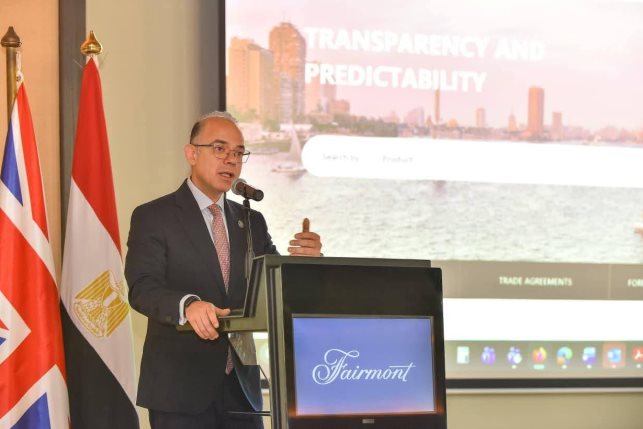
The agreement was signed in Cairo by Sufian Bataineh, Director General of the National Electric Power Company (NEPCO), and Yassin Mohamed, Chairman of the Egyptian Natural Gas Holding Company (EGAS), and was witnessed by Minister of Petroleum and Mineral Resources Karim Badawi and Jordanian Minister of Energy, Saleh Al-Kharabsheh.
As part of this deal, floating storage and regasification units (FSRU) in Egypt will handle LNG deliveries until the end of 2026, after which a newly constructed onshore regasification unit in Aqaba, Jordan, will take over operations. The Aqaba LNG terminal project is scheduled to begin this month with construction by the contractor.
The agreement includes both technical and commercial terms to protect the rights of both parties. Jordan will have access to up to 350 million cubic feet of gas per day, which is equivalent to 50% of the capacity of one FSRU or 25% of the combined capacity of two units. Importantly, Jordan will not incur any fixed costs unless the allocated gas is actually used, offering a cost-efficient approach to LNG consumption.
This arrangement is expected to significantly reduce Jordan’s annual LNG costs.
The cost per LNG shipment is estimated at $3 million, with an additional $5 million for transportation via Egypt’s pipeline network. This cost-effective solution is a significant departure from the $70 million per year currently spent on operating the LNG terminal in Aqaba.
Petroleum Minister Karim Badawi emphasized the significance of this agreement, noting that it is a testament to the growing cooperation between the two nations in the gas sector, aimed at ensuring long-term energy security through shared infrastructure.
Egypt and Jordan are also exploring further collaboration in the LNG sector. The two countries are studying the possibility of contracting with an international company to build a floating gasification unit that would receive LNG shipments, re-gasify the gas, and inject it into both national grids. Additionally, both countries are in the process of evaluating a joint purchase of a gasification vessel to meet their mutual needs for importing LNG.